동물성 감염의 전염에 가장 위험한 병원체인 진드기에 대한 선별은 현재 대부분 PCR 기반 테스트에 의존한다.
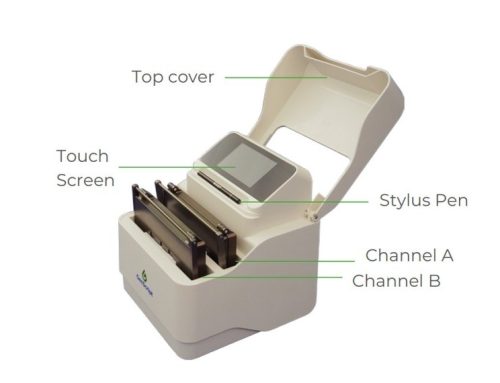
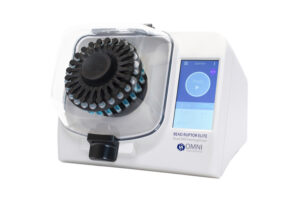
그러나 단단한 외골격으로 인해 완전한 분석이 상당히 어려운데, Bead Mill Homogenizer를 사용하면 효소분해 보다 선별 작업의 민감도를 유지하면서 선별 시간도 획기적으로 줄일 수 있다.
EQUIPMENT
 |
  |
| Bead Ruptor Elite (#19-042E) w/ 2mL Tube Carriage Kit (#19-373) |
2mL Hard Tissue Homogenizing Mix w/ 2.8mm Ceramic Beads (#19-628) |
PROCEDURE
| Cycle 1 | Dwell | Cycle 2 |
| 6m/s, 60s | 45s | 6m/s, 60s |
RESULTS
잘 갈려진 homogenate 에 버퍼를 첨가 후 모든 병원체들은 표 1과 같이 50 copy/mL 미만의 copy number로 검출되었다.
선별된 모든 병원체는 각 농도 50 copy/mL에서 3번의 반복 중 적어도 2번 검출되었고, 500 copy/mL에서 모든 병원체에 대해 100% 검출되었다.
| Reported Target | 1000 cp Spike | 500 cp Spike | 50 cp Spike |
| Anaplasma phagocytophilum | 3/3 | 3/3 | 3/3 |
| Babesia microti | 3/3 | 3/3 | 3/3 |
| Borrelia Group 1 | 3/3 | 3/3 | 3/3 |
| Ehrlichia chaffeensis | 3/3 | 3/3 | 3/3 |
| Borrelia Group 2 | 3/3 | 3/3 | 2/3 |
| Borrelia miyamotoi | 3/3 | 3/3 | 3/3 |
| Rickettsia spp. | 3/3 | 3/3 | 3/3 |
| Ehrlichia ewingii | 3/3 | 3/3 | 2/3 |
| Ehrlichia muris eauclairensis | 3/3 | 3/3 | 2/3 |
| Negative Control | 0/3 | 1/3 | 0/3 |
Table 1. Detection profile for nine tick-borne pathogens on spiked samples.
표2는 자연적으로 확인된 pathogen burden 에 대한 copy number 이다.
| Pathogen | Copy Number per mL | Reference |
| Anaplasma phagocytophilum | 339,000 – 609,000 | 5 |
| Babesia microti | 255,000 – 1,040,000 | 5 |
| Borrelia Group 1 | 2,590 – 4,450 | 6 |
| Bartonella Run Control | 278 – 103,000 | 7 |
| Ehrlichia chaffeensis | 210 – 6,000 | 8 |
| Borrelia Group 2 | 15.3 – 15.8 | 9 |
| Borrelia miyamotoi | 5,647 – 115,797 | 10 |
| Rickettsia spp. | 40– 10,000 | 11 |
| Ehrlichia ewingii | None reported | |
| Ehrlichia muris eauclairensis | None reported |
Table 2. Pathogen copy number per milliliter for naturally seen pathogen burden as reported in the literature.
CONCLUSION
여기서, 우리는 bead beating homogenization이 진드기 병원체를 sub-clinical level 에서 탐지하기 위해 최적화된 도구라는 것을 확인했다.
이 효율적이고 효과적인 워크플로우를 통해 관련 연구자나 의료 종사자들이 병원체의 성질을 더 잘 이해하고 예방 및 치료 전략을 더 효과적으로 구현할 수 있을 것이다.
References
Parola & Raoult, 2001 – Ticks and tick-borne bacterial diseases in humans. Clin Infect Dis, 32:897-928.
Menchaca et al., 2013 – Microbiome changes during Amblyomma americanum nymph-to-adult transition. PLoS One, 8:e67129.
Ammazzalorso et al., 2015 – Comparison of DNA extraction methods for ticks. PeerJ, 3:e1147.
Francesconi et al., 2008 – Automated vs manual DNA extraction for fungi by qPCR. J Clin Microbiol, 46:1978-1984.
Stańczak et al., 2015 – Detection of Anaplasma phagocytophilum & Babesia spp. in Ixodes ricinus. Exp Appl Acarol, 66:63-81.
Hodzic et al., 2014 – Resurgence of Borrelia burgdorferi after antibiotic treatment in mice. PLoS One, 9:e86907.
Torrejón et al., 2022 – Molecular survey of Bartonella in cats, dogs, humans, and ticks. Pathogens, 11:749.
Su et al., 2021 – Diversity and phylogeny of uncultured Ehrlichia in Haemaphysalis ticks, Japan. Sci Rep, 11:1-11.
Kumagai et al., 2018 – Relapsing fever group Borrelia in wild deer in Japan. Ticks Tick Borne Dis, 9:465-470.
King et al., 2017 – Validation of droplet digital PCR for Borrelia DNA in Ixodes scapularis. Parasitology, 144:359-367.
Karim et al., 2017 – Study of ticks and tick-borne livestock pathogens in Pakistan. PLoS Negl Trop Dis, 11:e0005681.
Gusa et al., 2001 – Identification of a p28 gene in Ehrlichia ewingii.